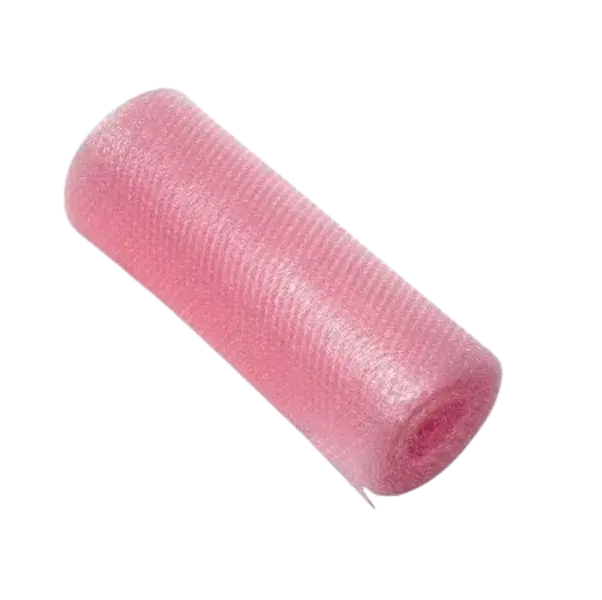
Antistatic Packaging 101: Protecting Electronics from ESD Damage

Electrostatic discharge (ESD) is one of the most common — and most invisible — causes of electronics failure in transit. A component can be damaged by a static event far below what a human can even feel, then fail weeks later in the field. For electronics manufacturers and exporters, antistatic packaging is not optional.
What surface resistance range do you need?
Antistatic films are specified by surface resistance, measured in ohms per square. The right range depends on how sensitive your components are and whether you need dissipative or shielding protection.
- •10^6–10^9 ohms/sq: static-dissipative — the workhorse range for most PCBs and assemblies.
- •Clean-room compatibility: essential for semiconductor and medical device packaging.
- •Transparent finish: lets QA inspect parts without unwrapping.
Common mistakes to avoid
- •Using regular bubble roll for PCBs — standard films can generate static, not prevent it.
- •Assuming "pink poly" is always enough — verify the surface resistance for your parts.
- •Ignoring the outer layer — an antistatic inner in a static-generating outer box defeats the purpose.
Built for electronics hubs
Hong Kong and Southeast Asia are dense electronics corridors; European and US OEMs also source dissipative film from India when the resistivity range is on the PO. We supply antistatic film specified to your test method, with custom dimensions. Contact us for technical data sheets.
Products mentioned
- Antistatic Film — ESD protection
- Bubble Pouches — Converted goods
Get a spec from the plants
Samples and quotes for buyers in India, South Asia, the Middle East, Europe, the US, Africa, and Russia. Confirmed export lanes: Hong Kong and the UAE.
Request a quote